
Redlining, or Value Over Artifacts
by on
What's the most famous negotiation in tech history?
Perhaps it's the one that accompanies the most famous draft non-disclosure agreement in tech history. One that cost one generational technologist billions.
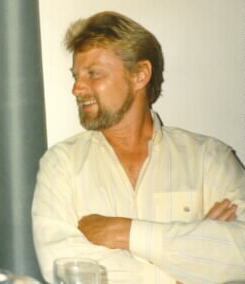
Redlines: the Artifacts
If you're a corporate lawyer or you've ever been represented by one, you'll be familiar with the "redline".
For the unfamiliar: a redline is a document that marks the changes between one document and another.
Back in the day a redline was hand-produced, probably by a secretary, with a red pen. She would review two documents line-by-line and mark differences between them in red. It was a necessary but painstaking process that may have taken hours for even a short document.
Today these are "tracked changes" in the basic case, or are rendered into separate, colorful documents when produced by professionals using specialized software to minimize the differences.1
Here's what a Tritium redline might look like, for example.

Readers working in software will also be familiar with "diffing". Redlines are like diffs, but for documents.
Redlines are often the central focus of contract negotiations, and they're the bread-and-butter of junior corporate law associates. But they aren't intrinsically valuable. It's important to understand that a redline, like a diff, however, is just one product in a much larger valuable context. A redline is used to communicate the results of the process which is drafting (programming) and, in legal contexts, perhaps negotiation.
Usually redlines mark good and important changes. But, just like diffs in software development, often times those changes are irrelevant or even bad. Sometimes the best redline is therefore the one that never existed.
What do I mean by that?
Let's consider an example.
Big Blue and Digital Research 2
In the late 1970s the young "microcomputer" industry was dominated by a so-called "trinity" of products: the Apple II, the Commodore PET and the Tandy TRS-80.
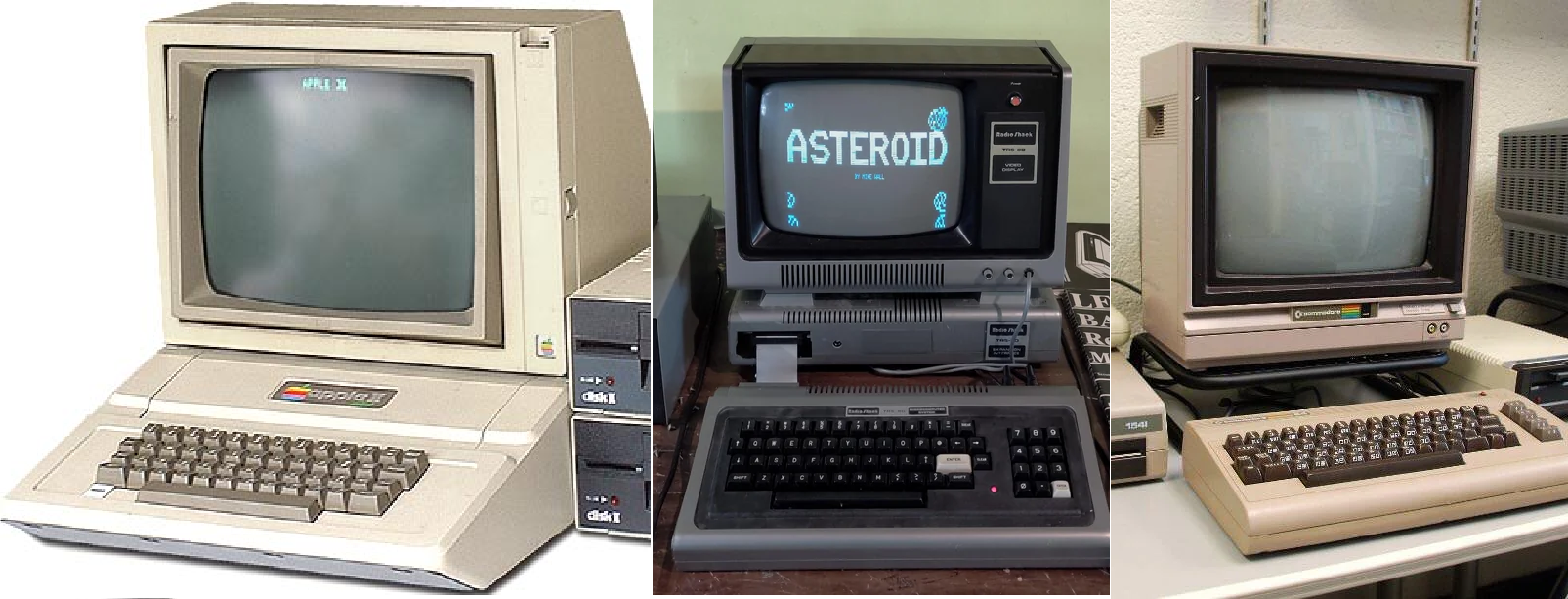
Apple, Commodore and Radio Shack (the purveyor of the Tandy brand) each understood, however, that some day the 3000 pound gorilla dominating high-end corporate computing would throw its 70% market share in mainframes behind a microcomputer.
That gorilla was International Business Machines Corporation.
But for a few years at least, the trinity felt safe from "Big Blue".
You see IBM was a vertically-integrated player. It owned the whole stack from its heavy emphasis on rigorous engineering which required building products bottom-up to its massive formalwear-clad, persistent salesforce.
Over the years, however, it seems a dominant position in mainframes and over-emphasis on engineering had allowed IBM to become a bloated bureacracy suffering from "not invented here" syndrome.
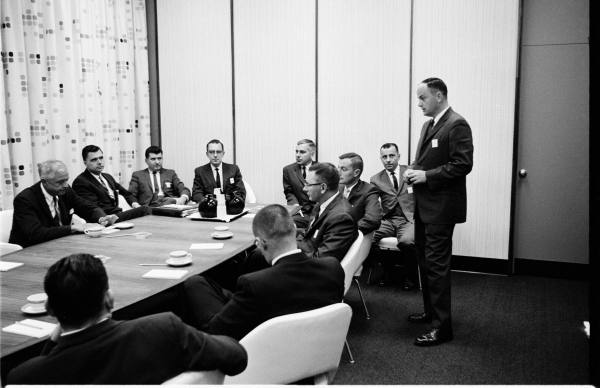
Still, IBM was an aircraft carrier. Slow to turn, but a decisive force once engaged.
And the "trinity" dreaded the day that aircraft carrier finally turned toward their fledgling market.
But it turned out time actually wasn't even on their side. Some engineers at IBM had pitched management that the traditional IBM development cycle might lead to a decade delay in producing a mass-market microcomputer. This, they argued, was too long. If IBM took years to produce a microcomputer, it might be so far behind that the opportunity would be gone. Worse still, the microcomputer leaders were potential disruptors threatening to move up-market and dethrone the king of mainframes from below. IBM had to move fast this time.
The pitch worked.
Management agreed to a secret "skunkworks"-style program to build a completely "open" microcomputer using off-the-shelf parts.
This program was so out of character and secret, even within IBM, that it was relocated to southern Florida, far from IBM's corporate headquarters in New York.
Open Architecture
IBM's strategy was to copyright a critical sub-system of the microcomputer known as the "basic input/output system" or BIOS.
It would license out and purchase many of the remaining parts from existing suppliers in order to piece together a competitive product in a fraction of its normal development time.
Dubbed the "IBM Personal Computer", its "open architecture" suppliers included, for example, a promising memory chip company called Intel, a startup hard drive outfit known as Seagate and a group named "Micro-Soft" as an initial application provider.
Back to BASIC
Applications, IBM knew, were critical.
Apple had proved early on that even a single application could be leveraged to drive massive distribution of its system. It had ridden the success of the early spreadsheet application VisiCalc to drive wide distribution of its Apple II.
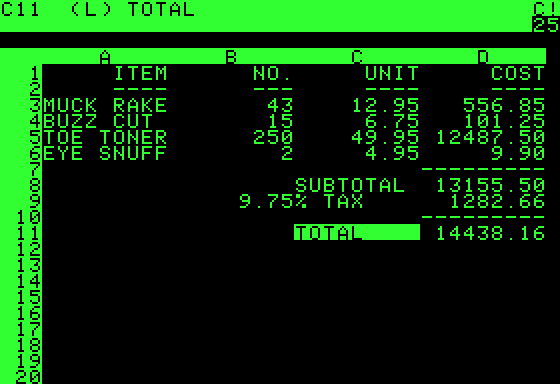
Another such so-called "killer app" at the time was the "beginner's all-purpose symbolic instruction code" or BASIC programming language.
BASIC was a simple language allowing average hobbyists to tinker with and extend their expensive new toys in a manner that made it an essential product for any microcomputer.
Bill Gates and Paul Allen's "Micro-Soft" had the best BASIC interpreter in the industry. Microsoft BASIC was ubiquitous across platforms and had played a key role in driving interest in what was arguably the first mass-market microcomputer, the Altair 8800.
So IBM reached out to Microsoft to strike a deal for BASIC.
IBM, being enormously secretive by default and engaged in a top-secret activity, asked Gates and his team to sign its standard, non-negotiable form of non-disclosure agreement.
The agreement was immediately signed as-is, and deal discussions began in earnest.
It's important to pause here and note that Bill Gates's father, William, Sr., happens to be the "Gates" in K&L Gates LLP, the now 1,800-strong, multinational corporate law firm--he was a high-agency Seattle corporate lawyer. Gates, Sr. often counseled his son informally on business deals, but it's not clear if Gates, Jr. even took the time to involve him at all over this non-disclosure agreement.
A deal was reached soon after for Microsoft to port its BASIC to the new "PC".
A simple version of Microsoft's BASIC would be hardwired into each new system.
Digital Research and CP/M
One of the last missing inputs for the PC, was the software that takes over from IBM's proprietary BIOS and coordinates all the work of all the off-the-shelf components while the computer runs. This part we know as the "operating system".
We often think of operating systems today as being one of Windows, macOS or another Unix-derivative.
But back then, operating systems existed in a somewhat open field, and IBM needed to choose. It needed to do so fast and quietly to get into the market before it was too late.
One popular operating system of the day was called "Control Program/Monitor" or CP/M. CP/M was created by a man named Gary Kildall and his California company Digital Research, Inc.
Gates knew Kildall, and he arranged a meeting at Kildall's home with IBM to license CP/M.

The details of this meeting and surrounding events are disputed, but it's clear Gary wasn't home when the IBM team in its famous dark suits showed up. They presented that same standard non-disclosure agreement, and after what some claim was a lengthy back-and-forth, and based on advice of counsel, DRI representatives refused to sign the agreement.
IBM left without a deal.
This infuriated Gates who saw Microsoft's opportunity evaporating. "We can get you an operating system," or something to that effect, was his answer to IBM.
Microsoft co-founder Paul Allen knew a local Seattle programmer who was working on a CP/M clone called "quick and dirty operating system" or "QDOS".
Allen negotiated a small deal for the rights to QDOS and licensed it (non-exclusively!) to IBM to ensure Microsoft's BASIC had a home in the new microcomputer.
That "quick and dirty" operating system of course eventually became "Microsoft disk operating system" or "MS-DOS".
While Kildall's team did ultimately ink a deal with IBM to distribute its CP/M operating system with the new microcomputer, IBM's desperation had been alleviated by Microsoft.
A version of Microsoft's DOS became the default operating system for the PC. Buyers would be required to pay an additional amount to have CP/M installed instead.
Boom
IBM's open architecture plan worked, and the skunkworks team launched the PC in about a year.
The personal computer exploded onto the market, surpassing even Apple sales within the first year.
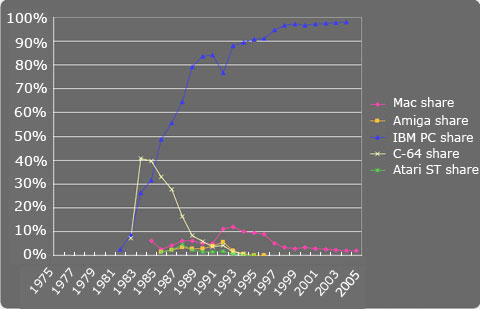
But the success was short lived for IBM and the victory pyrrhic.
The secret-sauce BIOS was soon reverse engineered by Compaq and others who started manufacturing compatible clones using the same supply chain as IBM.
This was a side effect of launching with that "open" architecture.
Those "IBM compatibles" then competed away most of IBM's profits on the microcomputer, but left behind an enormous market for processors, hard drives and, of course, Microsoft's operating system.
While Intel and Seagate also created great businesses during this time, Microsoft sold by far the highest profit margin piece of the stack.
This led to a transfer of most of IBM's enterprise value to Microsoft over the ensuing decades as DOS and later Windows monopolized the hyperbolic PC market of the late 80s and 90s. The market created by IBM.
Redlining
So what does this story have to do with redlining or legal tech? Redlining software didn't even exist in 1980. Heck, even using software to draft the non-disclosure agreement itself would have been state-of-the-art then!
No, Kildall and IBM would have had to engage in the slow, manual back-and-forth of paper negotiations.
And that's kind of the point.
Gary Kildall's lawyer allowed his client to lose the plot and focus on the artifact rather than the value. Neither manual nor computer-generated, it turns out the most valuable redline in this story is the one that never existed.
When presented with the non-disclosure agreement requested by IBM, Gates signed. He didn't negotiate. There was no redline. Microsoft thus joined the conversation as a key supplier to the PC revolution.
Gary Kildall and DRI didn't.
The minute DRI representatives refused to sign the standard non-disclosure agreement, IBM recognized what kind of urgency DRI would be bringing to its new product line. Negotiating such a standard document, which would have entailed manual redlining and (at best) hours-long re-drafting of even a simple document, gave IBM all the signal it needed to walk. Gary Kildall's team would slow IBM down.
That realization moved CP/M, DRI and Gary Kildall from the front of the line to second place provider of the PC operating system.
The CP/M version of the IBM PC of course never sold.
Kildall's unsigned, draft non-disclosure agreement may be the most negative value document of the twentieth century.
So What?
How did this happen?
One could fault Kildall for being out, his team who greeted the IBM suitors or, perhaps most glaringly, the lawyer that advised DRI during these negotiations.
We weren't there, and can't say things would have been any different, but it does seem like everyone got tunnel vision for the process and mistook the agreement and associated redlines for the value of being able to speak candidly with IBM.
Like Gary Kildall's lawyers, over-eager legal technology solutions can encourage their users into damaging tunnel vision. The best-in-class solutions today excel at reviewing documents, applying a pre-determined negotiation "playbook" and even drafting things from scratch. The speed and simplicity of such approaches must be balanced against the cost that they suppress the instinct to ask "why are we [not just] signing this agreement?".
That is, legal tech should not distract the users from the true value of their work by focusing on the artifact, the document or the redline. Instead, great legal technology should invisibly elevate the user to its most valuable abstraction level.
Gary Kildall didn't need a junior associate to feed the IBM document into his NDA machine and implement his "playbook" of edits.
He needed Gates, Sr. to look him dead in the eye and say "put down your red pen. Take this blue pen and sign this document."
-
Although bemoaned by non-lawyers, true legal redlines aren't tracked changes documents. They are best represented as read-only PDFs that are indelible records of suggested changes and not directly editable themselves. In this case, they're accompanied by the "clean" version which should be edited to avoid confusing in the drafting and negotiation process. ↩
-
Technologists may already be familiar with a particular disputed part of the history of technology visionary Gary Kildall. For these purposes we'll take the IBM side at its word because for various reasons it seems more likely to be correct, and more importantly it's more useful to making my case. ↩
Image credits: Kildall house: By Piotr J. Flatau - Own work, CC BY-SA 4.0, Trinity image: cybernews, Ars Technica for the IBM-compatible sales chart.